



Africa is at the verge of a turn-around in its energy needs with the gradual adoption of renewable energy technology in most countries within the continent and its growing multi-trillion dollar market. But in the wheel of this enormous opportunity is the lack of the skills to manage the technology contributing to the failure encountered by so many of these countries in the early phase of the adoption of solar technology, millions of dollars lost.
Despite growing demand for home solar systems and other off-grid renewable energy solutions in Africa and Asia, there is a growing shortage of job-ready talent to finance, develop, install, operate and manage these systems. And the biggest skill gap is in Sub-Saharan Africa. More than 600 million people in the region are still living without electricity, yet there are only 76,000 jobs in the renewable energy sector on the whole continent, according to the latest data from IRENA. Compare that to India, which has half as many people without electricity and 10 times more people working in the solar PV sector alone.
The photovoltaic market requires experts and technicians to utilize, design, and maintain the technologies. This can be a concern since skilled personnel and staff are scarce, which may lead to system failure and malfunction. Furthermore, personnel in the renewable energy sector must possess specific skills, which will necessitate further training for present professionals as well as an extension of the educational system to meet the PV market’s demand.
Solar energy has become crucial in providing the world with an opportunity to reduce its carbon footprint, as well as fighting the consequences of climate change. Furthermore, Africa is at the forefront of the regions affected by climate change with a future expectancy of worsening consequences, in addition to being a region with various electricity complications, energy demands, and global greenhouse emissions contributions. Therefore, not only is Africa in major need of adopting efficient renewable energy technologies for their apparent future concerns but also Africa is already considered a region that has significant solar energy potential due to its abundant natural and renewable resources. Solar energy’s potential in Africa could not only be a solution to many of the continent’s complications, but it could also help the continent’s economy thrive The potential of solar energy in Africa as well as techniques to efficiently implement it has piqued literary interest a lot recently however, this paper aims to highlight through literature not only the potential and the technologies available for adoption but also the challenges complicating the implementation. This paper is split into four literary sections, first section puts forward the challenges facing Africa in the uptake of solar energy technologies including financial, technological, human resources, and environmental challenges. Then, in-depth discussions of the various solar energy technologies for potential adoption. Third, the biggest solar energy projects implemented in Africa are put forward.
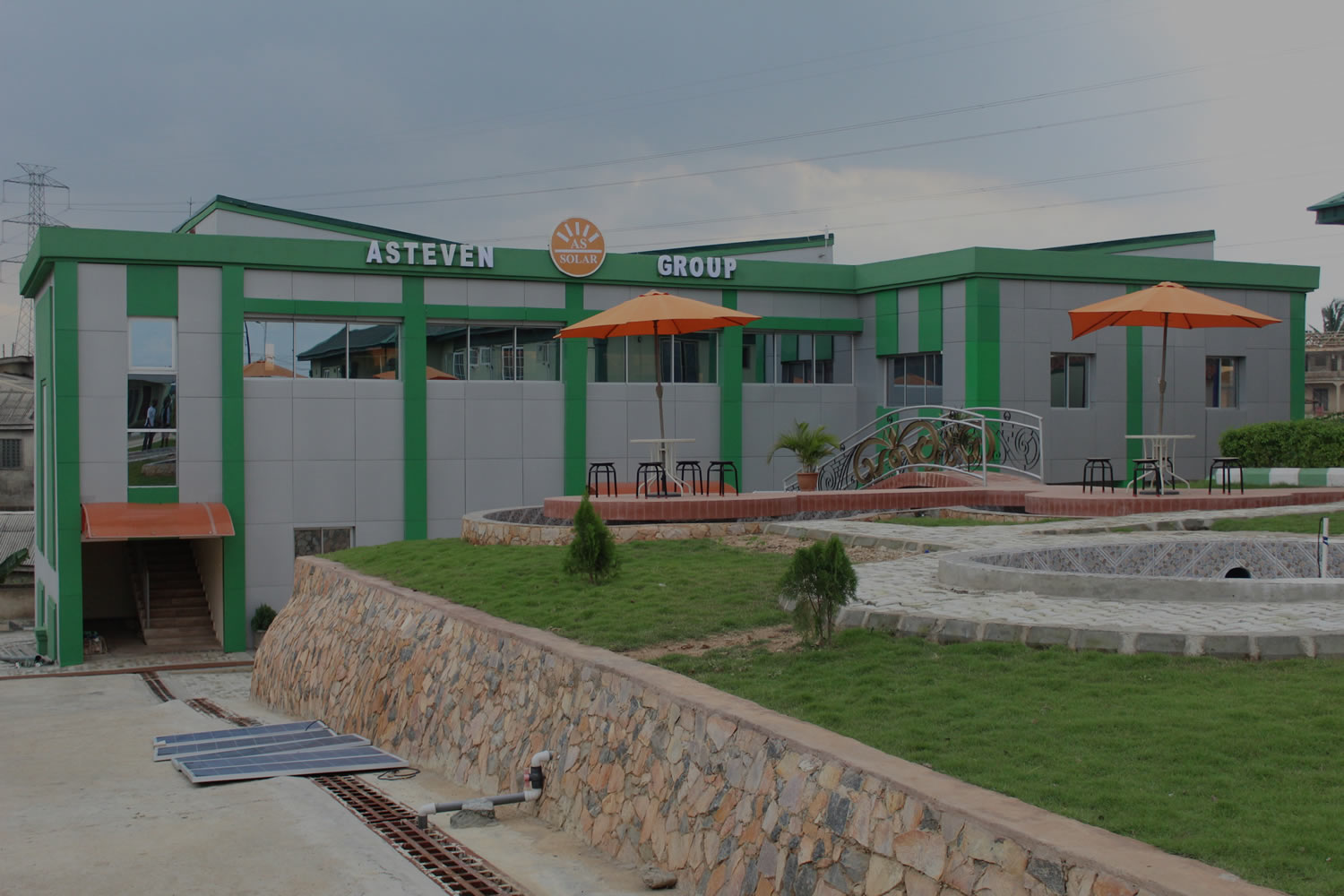
Asteven Group is one of the pioneer indigenous solar companies that manufactured world class products for the Nigerian market creating thousands of jobs through vendors and merchants of our products. Over the past 15 years, the company has operated across the six geo-political zones in the country and around five African countries deploying cutting edge solar technology. It is in the course of our business expedition that we discovered the lack of skills in the solar industry in the country with largely 98% of solar projects outsourced to foreigners even with billions voted by government at federal and state levels, and bulk of the money getting repatriated by foreigners to their own countries without adding much value to our economy. We started the Asteven Renewable Energy Institute as the first private renewable energy institute certified by Nigeria Board for Technical Education under the Federal Ministry of Education with world class curriculum that was drafted based on the German model of technical/vocational education. The institute which has graduated more than 5,000 students from just one location in the past few years is the only certified institute that provides National Higher Diploma Programme.
Asteven Energy Institute is the first vocational/Innovation Enterprise Institution(IEI) approved by the Federal Ministry of Education (FME) and accredited by Nigeria’s National Board for Technical Education (NBTE) to offer a National Innovation Diploma (NID) in Solar Energy Technology. The institute is equipped with modern and state-of-the-art facilities designed based on the German vocational skills model. According the founder/president of the Institute, Dr Sunny Akpoyibo, the institute established in partnership and full consultation with leading professional institutions in Germany.
It was commissioned on February 28th, 2018 as a solar training academy and since it’s inception has trained, certified, and empowered over 3000 able-bodied men and women across Nigeria in solar photovoltaic (PV) installation and entrepreneurship. It is accredited by the ECOWAS Center for Renewable Energy and Energy Efficiency (ECREEE) as a recognized institution for training and certification in Solar Photovoltaic (Off Grid) Installation in Nigeria.
With the Asteven 2 years National Innovation Diploma (NID) programme designed to help students develop a thorough understanding of contemporary science as applied to modern renewable energy technology and Nigerians can be sure of easier access to employment in Germany and even faster approval of residence permit.
by Gift Greg Nwokorie, Aug-Oct 2023.