



Upon landing, Alexander is first to step onto the beach. He spikes his spear into the sand and takes a knee to thank the gods for this new land. Although much of his beloved country is still in sight behind him across the water, with thousands of miles filled with hundreds of thousands of enemy soldiers ahead of him, he believes victory is at hand the moment he steps ashore. By simply choosing to embark on this quest, he knows in his heart he has already won.
Alexander then issues his first order of the campaign: “Burn the Ships.”
His commanders are shocked. As legend has it, they plea with Alexander, asking him why they should set fire to the one asset that could return them home? Alexander replied, “We will go home in Persian ships.”By removing their ability to retreat when difficult challenges were inevitably faced, Alexander knows he and his men will muster whatever it takes to conquer the mighty Persians. In the months and years that follow, he is proven correct
((Burn The Ships – Chapter One,by Able Ebenezer.com)
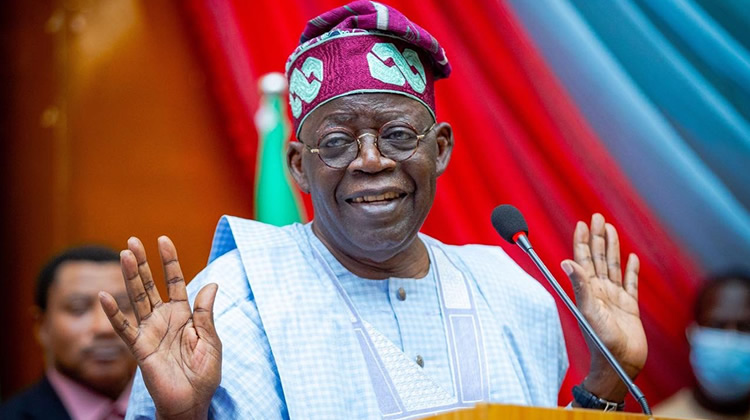
On the 29th May, 2023 at the inauguration of Nigeria’s new president, former governor of Lagos State, senator under the third republic and national leader of the All Progressives Congress (APC), Bola Ahmed Tinubu. His emergence after a hardly fought battle for the presidency which many considered the most embattled general elections in Nigeria’s history with fierce oppositions from the People’s Democratic Party (PDP), Labor Party (LP) and New Nigeria People’s Party (NNPP). The ceremonial inauguration of the new president did not only come with its momentary surprises but rather echoes its effect to such decibels that sounded beyond the borders of Nigeria but also nearby nations that have been sustained by the ship few Nigerians set cruise in.
Nigeria is the second largest oil and gas producer in Africa. Crude oil from the Niger Delta basin comes in two types: light, and comparatively heavy – the lighter has around 36 gravity while the heavier has 20–25 gravity. Both types are paraffinic and low in sulphur. Nigeria’s economy and budget have been largely supported from income and revenues gene- -rated from the petroleum industry since 1960. Statistics as at February 2021 shows that the Nigerian oil sector contributes to about 9% of the entire GDP of the nation. Nigeria is the second largest oil and gas producer in Africa, a major exporter of crude oil and petroleum products to the United States of America. In 2010, Nigeria exported over one million barrels per day to the United States, representing 9% of the U.S. total crude oil and petroleum products imports and over 40% of Nigeria exports.
The need for holistic reforms in the petroleum industry, ease of doing business, and encouragement of local content in the industry birthed the Petroleum Industry Bill by the Goodluck Jonathan administration on July 18, 2008. In her book, “ Fighting Corruption is Dangerous,” Dr Ngozi Okonjo Iweala shares the nightmarish experience in battling this humongous ship that a few Nigerians had fed fat from for decades and held the country under their grip to such extent that no president could deal with the problem headlong. One of those very excruciating experiences was the kidnap of her aged mother by unknown criminals leading to so much panic and trepidation that even international television media like CNN and BBC put the news on their headlines. Her defiant policies and initiatives to curb the exuberance of the country’s petroleum excesses as Finance Minister under the president Goodluck Jonathan administration did not only threaten her life but put anyone close to her at harms way.
According to Dr Ngozi Okonjo Iweala, she kept asking herself the questions, “Why was my mother kidnaped and almost murdered? And why was a group planning to maim me?
The answer to these awful questions were that I had stepped on the toes of some very rich and powerful people who were involved in a corruption scandal known in Nigeria as the oil-subsidy scam.”
The announcement by president Bola Ahmed Tinubu that oil subsidy had been removed and shall henceforth no longer be funded by Nigeria’s Federal government was a news many did not expect so soon. Even though it was not a new talking point in the country as historically the subsidy regime has faced several challenges that many Nigerians were familiar with. According to the Blueprint newspaper, “One of the main issues is that it has become a huge burden on the nation’s economy. The cost of subsidizing petroleum products had become a major drain on government finances, leading to significant fiscal deficits and a strain on the country’s budget. Apparently, the subsidy regime had been plagued by corruption and inefficiency, with a substantial portion of the funds intended for subsidy payments being diverted or mismanaged by previous administration.”
“Over the years, there had been calls for subsidy removal as a means to address these challenges. Proponents argue that removing subsidies would allow the government to redirect the funds saved towards critical infrastructure development, education, healthcare, and other social programmes. They argued that it would also promote more efficient use of resources and encourage private sector investment in the oil sector.”
Yet, opponents of subsidy removal, however, raised concerns about the potential negative impact on the population, particularly the poor and vulnerable segments of society. They argued that removing subsidies would lead to a significant increase in the prices of petroleum products, which would have a cascading effect on the cost of transportation, food, and other essential goods and services. This, in turn, could exacerbate poverty and inequality in the country.
The Nigerian government had made attempts to remove or reduce subsidies in the past, but these efforts had often been met with public outcry and protests.
The historical antecedent of subsidy removal on petrol in Nigeria was marked by a series of policy shifts, attempts, and controversies. The Nigerian government had implemented and reversed subsidy removal multiple times over the years.
The Tinubu administration was bent on sticking to its guts on the decision of ending the fuel subsidy no matter the cost. These costs could be grave as Nigeria and the world is faced with quantum splurge of economic problems. The country with a population of over 200 million people and a poor population of over one third of its total population could not endure the hardship of subsidy removal, but the continuance of it would be more deadly.
According to the president, “The government I lead will repay you through massive investment in transportation infrastructure, education, regular power supply, healthcare and other public utilities.”
“Solutions to problems can never be as instant as coffee. But we must certainly be there. I know the removal of fuel subsidy has created some things.”
It has been months since the announcement of fuel subsidy removal by president Tinubu and the hope for many is that their lives will become much better than it has been under the previous administration.
Reports also show that the economy’s key sectors suffer due to low earnings already consumed by inflated subsidy payments. The trade deficit of $20 million recorded in November 2022 from the low crude oil export receipts signals the urgency to jettison petrol subsidy, develop local production capacity and end fuel import dependency for a favorable balance of trade.
Fuel subsidy was riddled with corruption, manipulation and mismanagement. The N3.92 trillion allocated for petrol subsidy between January 2020 and June 2022, surpasses the combined federal budgets for healthcare, education, and defence throughout the 30-month period. Nigeria spent about 10 trillion Naira on petroleum subsidies between 2006 – 2018. It gulped N5.82 trillion 2021 – 2022 and N3.36 trillion being proposed for the first six months of 2023. These figures indicate a significant drain on the government’s finances, impeding its ability to invest in crucial sectors which could bolster economic growth and people’s well-being.
To some observers president Tinubu’s decision to uphold the subsidy removal was untimely but for others it is a necessary evil if his government was serious about making significant change that will benefit the people. Like Alexander the Great, who created an empire that stretched from his home in Macedonia to India, ostentatiously burned his ships when arriving in Persia in 334BC turning around what seemed like a bleak situation into a historic moment.
As we look in the days ahead into the Tinubu administration one would wonder if Nigerians will remain adamant and conquer the monster or let this ship to burn into oblivion.
by Simon Tuleh, Aug-Oct 2023.