



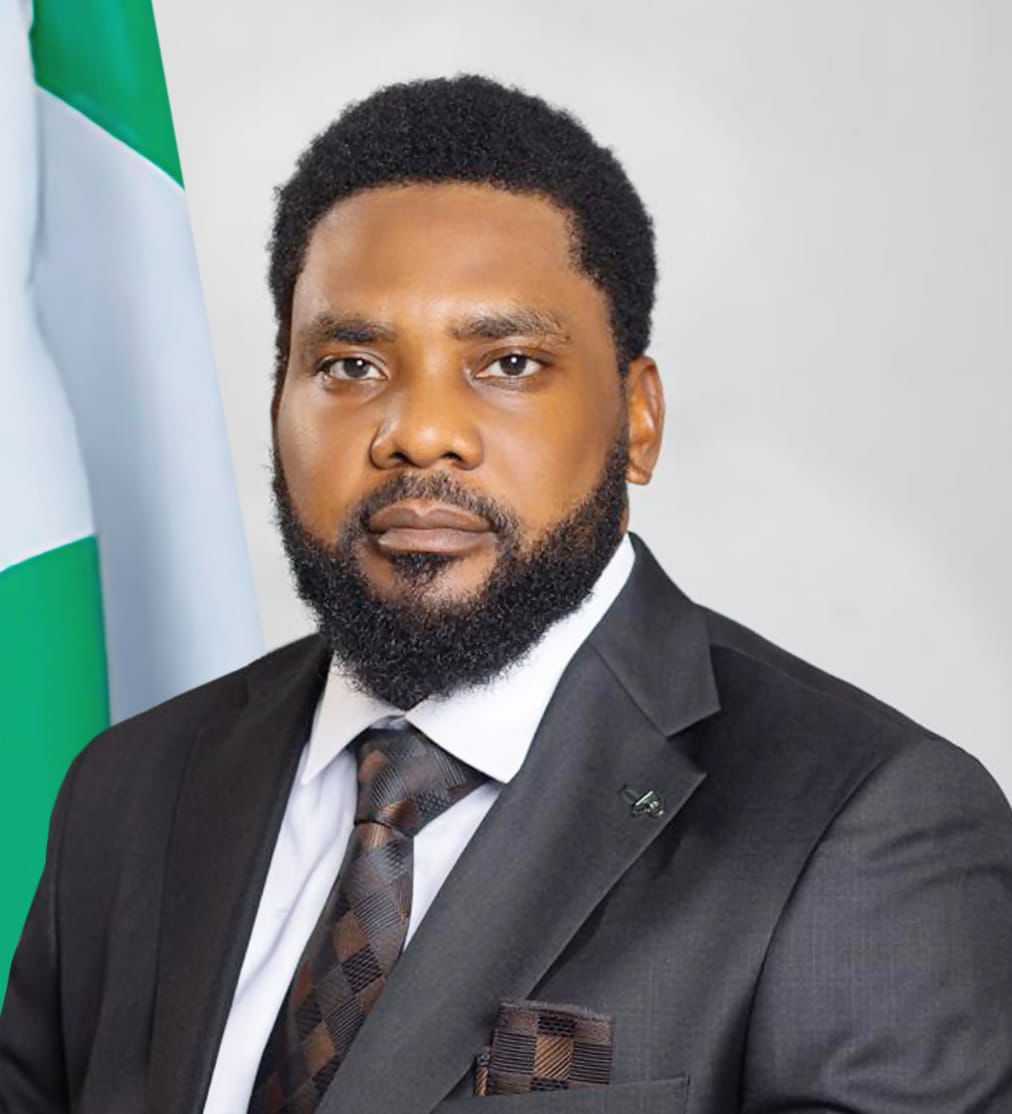
Energy Commission of Nigeria serves as one of the pivotal government entities to drive the nation’s energy transition agenda, this is why president Bola Ahmed Tinubu appointed in October 2023, Dr Mustapha Abdullahi as the Director General/Chief Executive Officer of the commission. Dr Abdullahi also emerged one of the youngest chief executives in the country at the age of 38 years and set to ensure the improvement of Staff Welfare and deemed it necessary to be at par with standards in the energy sector and the review of extant energy policies, initiatives and frameworks to stimulate economic development. The well earned energy expert brought on board wealth experience garnered in Nigeria’s energy regulatory sector for actualization of the Renewed Hope agenda.
In a swift response to the lingering malaise that bewildered the Commission before his assumption of office, Dr Abdullahi deployed his wealth of public service experience to drive all inclusive people centered reform that would facilitate the country achieving her energy efficiency goal. His preponderance strident leadership earmarked very laudable goals which included the following:
As soon as he assumed office as the Director General of the Energy Commission of Nigeria, Dr. Mustapha Abdullahi inaugurated the National Bioenergy Steering and Technical Committee. This strategic move aligned with Nigeria’s commitment to the Global Bioenergy Partnership (GBEP) initiatives. The Committee was mandated to explore and unleash the vast potential of the nation’s bioenergy resources that Nigeria is greatly enriched with. Emphasizing the manifold benefits of modern bioenergy, he highlighted its role in enhancing energy access and security, fostering rural economic development, boosting household income, and elevating the living standards of rural communities. Dr. Abdullahi encouraged the Committee to engage in discussions that contribute solutions to the nation’s challenges in energy, socio-economic development, and climate change mitigation.
Also, the DG/CEO, Energy Commission of Nigeria, Dr Abdullahi led the Commission to collaborate with UK Department for Business, Energy and Industrial Strategy (BEIS) in fostering Nigerian Energy Calculator 2060 (NECAL2060) visionwhich is an upgraded version of the Nigerian Energy Calculator 2050(NECAL2050).
The New Version/Calculator was uniquely open and transparent energy planning and modelling tool that can be used by governments, researchers, stakeholders, and the general public to understand and develop evidence-based policies and strengthen sustainable and net-zero energy planning. The tool provides answer to the fundamental questions of how the energy system can evolve over the coming decades and its impact on greenhouse gas emissions, energy security, and energy mix for driving the economy and the cost implications.
Dr Abdullahi led Energy Commission of Nigeria (ECN), in collaboration with the United Nations Environment Programme (UNEP) and various partners, had initiated a training programme aimed at equipping stakeholders in the sector with the necessary skills for enforcing energy performance standards for air conditioners in Nigeria. The one-day training workshop on air conditioners monitoring, verification and enforcement (MVE) is an integral part of the broader project, “Scaling-Up Energy-Efficient and Climate-Friendly Cooling in Nigeria.”
Dr Abdullahi outlined that one of the key project activities is providing training on monitoring, verification, and enforcement (MVE) to ‘support the implementation of upcoming minimum energy performance standards (MEPS). This training is specifically designed for relevant enforcement and regulatory agencies of the government and vendors of such products.
“The main objectives of this training workshop are: to build the capacity of relevant government institutions to effectively enforce energy performance standards of air conditioning equipment; to enhance their ability to carry out surveillance activities in the air conditioner sector to monitor compliance with these standards; to harness feedback from stakeholders and solicit their buy-in regarding the new energy performance standards proposed for air conditioner standards.”
Under his leadership, the Energy Commission of Nigeria (ECN) had officially unveiled the Gazette copies of the National Energy Policy and National Energy Master Plan, marking a monumental moment for Nigeria’s energy sector and signifying the steadfast commitment of president Tinubu’s Renewed Hope Agenda for strategic planning and coordination of energy issues, in tackling the socio-economic challenges of the country. With the formalization of these documents in an official government format (gazetting) by the ECN, Nigeria now had unveiled a solid framework for the enforcement and implementation of crucial energy policies.
In its commitment to contribute to the national food security agenda of the Federal government, the Energy Commission of Nigeria (ECN) enjoined Nigerians in the diaspora to offer their expertise and support government’s efforts in addressing the global food crisis. Speaking at the Northern Powerhouse Stakeholders’ Event organized by the Nigerian Society of Engineers (NSE) Manchester Chapter, United Kingdom, Dr. Mustapha Abdullahi, Director-General of ECN, emphasized the vital role of diaspora engagement in overcoming food security challenges.
Dr. Abdullahi highlighted recent government initiatives, such as the proposed Ministry of Livestock Development and a 150-day duty-free window for key agricultural imports, as measures to stabilize food supply. He underscored the importance of technology in enhancing agricultural productivity and urged Nigerian engineers abroad to contribute through innovation and knowledge sharing.
“In improving human lives and meeting socio-economic needs, technological innovations are central. Engineers transform scientific outputs into practical technologies that improve our daily activities,” stated Dr. Abdullahi.
He praised Nigerian educational institutions for producing talented individuals who excel globally and noted the significant contributions of diaspora communities to their home countries, citing examples from Japan, China, and South Korea.
Dr. Abdullahi outlined specific areas for diaspora intervention, including: Agricultural Infrastructure Development: Designing and building irrigation systems and water management to increase crop yields. Dr Abdullahi also mentioned Farming Mechanization and Automation: Implementing technologies to optimize crop management and reduce manual labor, as well as Food Processing and Preservation: Enhancing food safety, nutritional value, and reducing waste through advanced processing techniques. He further highlighted the potential of integrating renewable energy with agricultural practices, a research area being explored by the National Centre for Energy Research and Development at the University of Nigeria, Nsukka, a research centre of the Energy Commission of Nigeria.
“As the Director-General/CEO of ECN, I invite Nigerian Engineers in diaspora to collaborate in driving agricultural transformation in Nigeria, particularly in Agrisolar. Your contributions will help bridge infrastructure gaps, enhance food production, and promote sustainability,” Dr. Abdullahi concluded.
In less than one year since his assumption of office, Dr Mustapha Abdullahi has made giant strides that many CEOs in government entities could only wish to achieve, and there is no sign that the young knowledge thirsty technocrat will be slowing down in the days ahead. One would leave very slimy room for debate by saying he is the best CEO the Commission had been endowed with.